Please enter email address associated to your account
Change Password
Password changed successfully.
Request sent!
For more tailored inspiration, please fill in the 3 questions below.
You need to answer all of the questions before submitting.
Thanks!
Delete Account
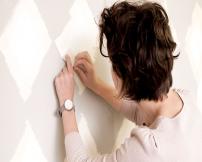
Shades used: White Cotton, Dusted Fondant, California Days
Colour Blocking Walls
Colour blocking is a contemporary interior design trend that's bringing vibrant energy back into homes. This technique combines carefully chosen paint shades to create a striking visual impact, whether you opt for a block colour feature wall or want to highlight architectural features. Discover your favourite designs in our guide, which includes plenty of colour blocking tips and inspiration to help you refresh any room with bold colour.
What is colour blocking?
Colour blocking is the technique of combining multiple distinct paint colours within a single space to create bold, geometric designs. Whether you prefer vibrant contrasts, soft pastels, or tonal harmonies, colour blocking can be adapted to your taste.
This painting technique works best on walls, allowing the design to shine, but you can also use it on trim, doors and furniture. It instantly creates focal points that define your room's character and makes a surprisingly easy DIY project.
What you’ll need for colour blocking
Before you begin your colour blocking project, make sure you have these essential tools and materials on hand:
Dust sheets
Tape measure
Pencil
Chalk
String
Spirit level
Masking tape
Paint stirring stick
Paint rollers and trays
Multiple roller heads (one for each colour)
Small paintbrushes for cutting in and touch-ups
Your chosen Dulux paint colours – use our Find a Colour tool to discover your favourites
Step-by-step guide to colour blocking
Learn how to colour block a wall by following these easy steps:
1. Prepare your space. Lay dust sheets across the floor and cover any furniture or fixtures you want to protect from paint splashes.
2. Plan and measure your design. Use a tape measure and pencil to mark out your colour blocks at regular intervals across the wall.
3. Create guide lines. For longer sections, coat lengths of string with coloured chalk, tape them along your pencil marks, then ping the strings against the wall to create clear guide lines. For shorter sections, you can mark the wall directly using a pencil and a spirit level. This video tutorial is a helpful visual guide to this technique.
4. Apply masking tape. Remove the string and apply masking tape along the inside edges of your chalk or pencil lines. Press down firmly to create a good seal, ensuring crisp edges.
5. Using a roller, paint your first colour block, taking the paint just over the edge of the tape to prevent it from bleeding. Apply at least two coats for even coverage, allowing proper drying time between coats (check the paint tin label for exact drying times).
6. Apply additional colours. Use a fresh roller head and tray for each new colour. Paint each remaining colour block until your design is complete.
7. Remove the tape. When the paint is touch-dry but not fully cured, carefully peel away the masking tape at a 45-degree angle. If you remove it too early, the paint may run, but if you leave it too late, it could peel away with the tape.
8. Perfect the details. Once the paint is fully dry, touch up any imperfections with a small brush.
Colour block wall ideas
Looking for inspiration? Here are some creative ways to incorporate this painting technique into your home, whether you want to create a colour-block bedroom wall or try this design in your living room, kitchen or hallway.
Shades used in Image: True Joy, Milled Flour, Mahogany Red, Sweet Embrace, Equisite Coral
Introduce several shades
Don't limit yourself to just two colours. Colour blocking works beautifully with five or even six shades, creating a gallery wall effect. Try painting vertical stripes across an entire wall, experimenting with how different colours interact.
For a graduated striped effect, start with warm pink tones like Coral Charm and Raspberry Diva at one end, transition through neutral shades like White Cotton and Honey Beam in the middle, then finish with cool blues such as Stonewashed Blue and Bright Skies at the other end. This creates an impressive colour journey that adds depth and interest to any space.
Try unexpected colour contrasts
Challenge conventional colour combinations by pairing unexpected hues together. Soft pastels can create striking contrasts when placed side by side, whilst jewel tones bring luxury and drama. Don't be afraid to experiment – sometimes the most unconventional pairings make the most impressive results.
Create a colour-blocked feature wall
Turn a single wall into the room's focal point with a colour-blocked feature wall. A horizontal split creates a horizon line that can make ceilings appear higher or rooms feel more grounded. Geometric patterns add a contemporary edge, whilst asymmetric blocks offer a unique artistic flair.
Shades used in image: Wild Wonder, Denim Drift, Midwinter Tide
The best shades for colour block wall painting
Softly does it
Contemporary light fixtures are both functional and eye-catching design features in neutral living rooms that can elevate the entire space. Consider the tone of your bulbs and how this impacts your chosen paint colours. For example, warm-toned bulbs and soft lighting will transform a neutral living room into a cosy retreat.
Square it up
Embrace the geometric look with square colour blocks in contrasting shades. Choose two or three complementary colours and create a checkerboard or grid pattern for maximum impact. This design works brilliantly in children's rooms or contemporary living areas, offering both playfulness and sophistication.
Shades used in image: Free Groove, Mellow Flow and Slow Swing
Work of art
Transform your wall into a canvas by treating your colour blocks as abstract art. Use bold, saturated hues in irregular shapes and sizes to create a statement design that’s more impactful than framed artwork. Deep, rich shades like Teal Tension, Acai Berry, Auburn Embers and Sapphire Salute create dramatic block-colour wall art. This approach is ideal for living rooms, dining areas or home offices where you want to spark creativity and conversation.
Tonal shift
Create harmony through tonal colour blocking by using varying shades of the same colour family. Paint the palest hue at the top of your wall, moving through the mid-tones and applying the deepest shade at the bottom (or vice versa). This sophisticated technique adds depth and interest whilst maintaining a cohesive, calming atmosphere. It’s particularly effective in open-plan spaces or rooms where you want colour without overwhelming the senses.
Vital ingredients
Inject energy and optimism with a palette inspired by fresh, vibrant hues. Combine zesty shades like Lemon Spirit and Dewy Lawn for a kitchen or dining space that feels alive and welcoming. These cheerful shades stimulate appetite and conversation, making them perfect for social spaces. Balance the vibrancy with neutral tones like Almond White or Jasmine White to prevent colour overload.
Looking for more decorating inspiration? Check out these related guides: